Serengeti Migration River Crossings
When, Where & How to Witness Nature's Most Dramatic Moment

New to Planning a Serengeti Safari?
This guide focuses specifically on river crossings. For the complete Serengeti planning picture - where to stay, when to visit each sector, costs, and the full Migration calendar - start with our Serengeti Safari Manual. It's the master guide that makes everything else make sense.
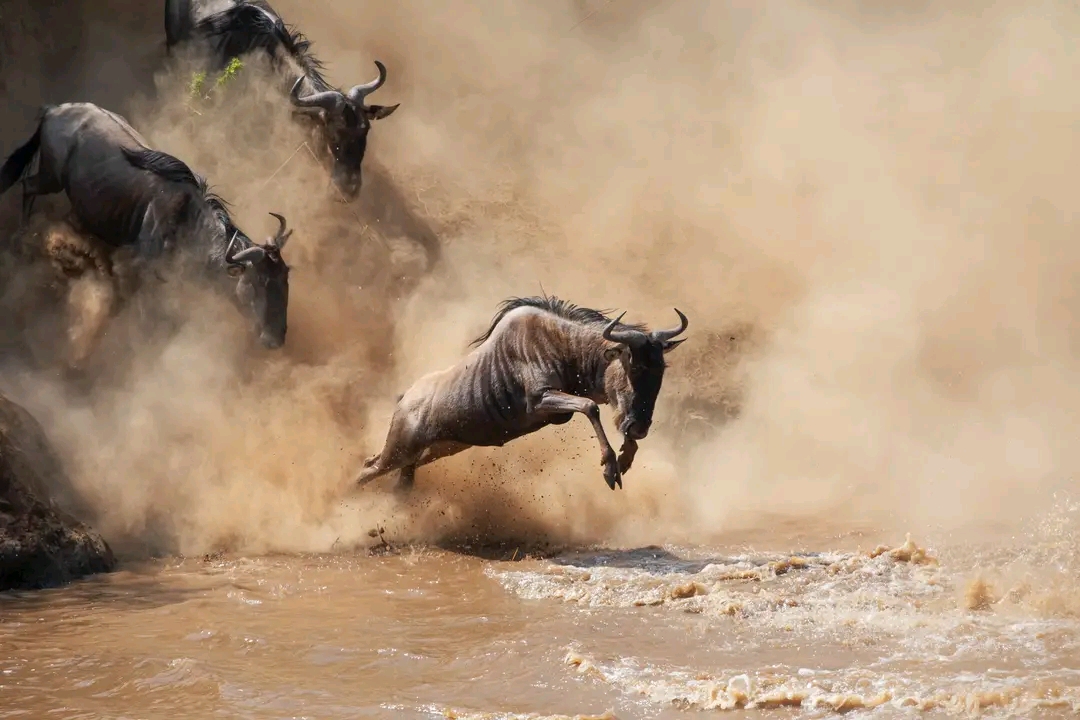
Thousands of wildebeest stand at the riverbank. They mill, they pace, they approach the water's edge and retreat. Hours pass. The tension builds. Then, suddenly - chaos. The first wildebeest leaps, and within seconds thousands follow, plunging into crocodile-infested waters in a frantic, desperate scramble to reach the opposite bank. This is the Serengeti Migration river crossing, and it's the single most dramatic wildlife spectacle on Earth.
Why River Crossings Are The Holy Grail
The Great Migration involves 1.5 million wildebeest moving constantly through the Serengeti-Mara ecosystem following the rains.
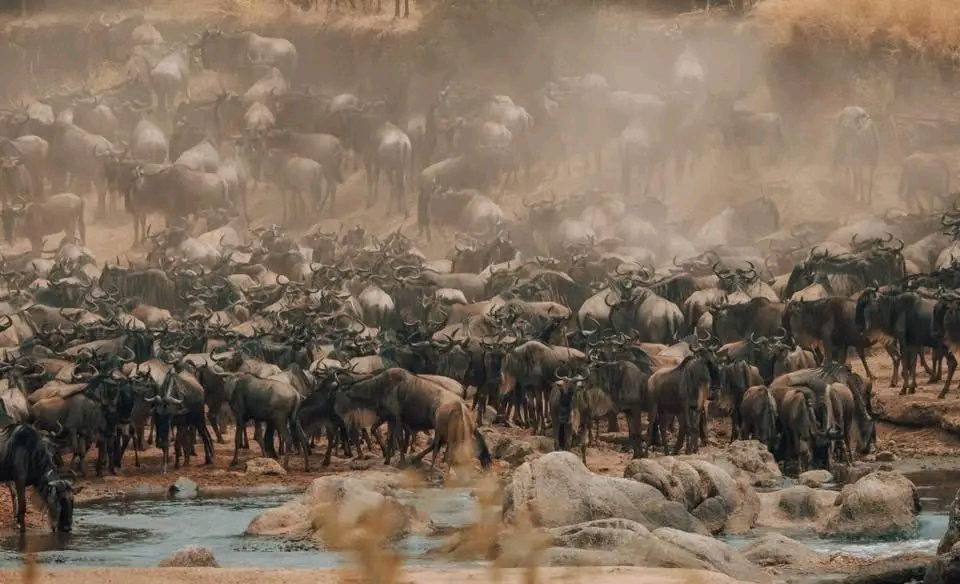
But of all the moments in this year-long journey, river crossings are what everyone comes for. Here's why:
Concentrated drama: Thousands of animals crossing at once creates unparalleled action and photographic opportunities
Life-and-death stakes: Nile crocodiles lurk in the water, some exceeding 5 meters. Wildebeest drown. Calves get separated. It's nature at its rawest.
Unpredictability: Crossings don't follow schedules. Herds might cross three times in one morning or stand at the riverbank for six hours deciding.
Scale: Nothing else in the animal kingdom compares to watching thousands of panicked wildebeest plunge off steep banks into churning water.
“You can see lions hunting anywhere in Africa. You can watch elephants at dozens of parks. But river crossings at this scale, with this intensity, happen only in the Serengeti-Mara ecosystem during a few specific months each year.”
The Two Rivers: Mara vs Grumeti
The Migration crosses two major river systems as it moves through the Serengeti. Each offers different experiences, timing, and logistics.
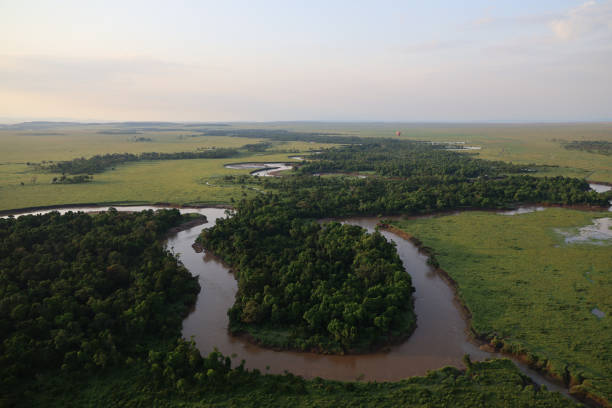
Mara River
Location:Northern Serengeti
Peak Months:July - September
Crossing Frequency:Very High
Drama Level:Maximum ⭐⭐⭐⭐⭐
Why the Mara River is legendary:
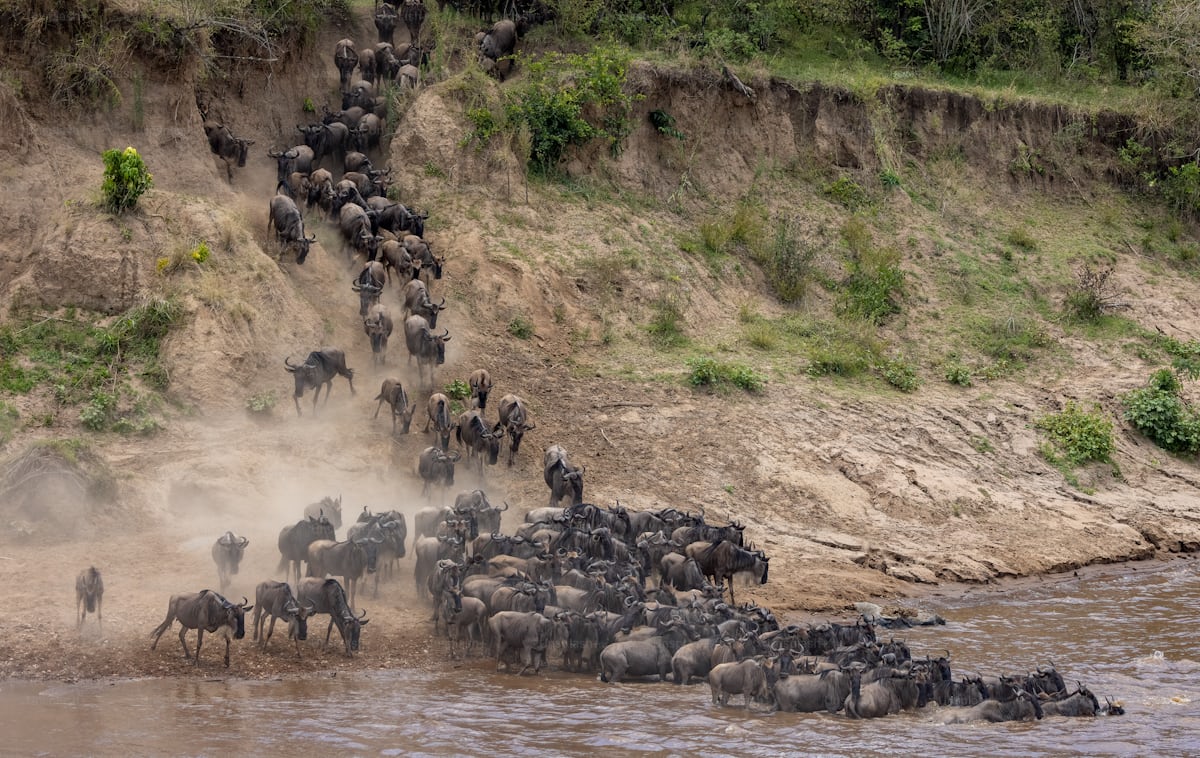
Steep, dramatic banks - wildebeest literally leap off cliffs
Giant Nile crocodiles concentrated at crossing points
Herds cross and re-cross multiple times (back and forth between Tanzania and Kenya)
Most photographed and filmed crossing location
Higher tourist concentration (you won't be alone)
Grumeti River
Location:Western Corridor
Peak Months:June - Early July
Crossing Frequency:Medium
Drama Level:High ⭐⭐⭐⭐☆
Why the Grumeti matters:
Earlier timing - good for travelers who can't do July-August
Enormous crocodiles (some of Africa's largest)
Fewer tourists than northern Mara crossings
Smaller river means less dramatic crossings (not as many "cliff jumps")
Migration doesn't linger as long - passes through faster
| Factor | Mara River (North) | Grumeti River (West) |
|---|---|---|
| Best Months | July, August, September | June, Early July |
| Crossing Frequency | Daily (when herds present) | Less frequent |
| Visual Drama | Extreme (steep banks, cliff jumps) | High (but gentler banks) |
| Crocodile Action | Abundant | Abundant (even larger crocs) |
| Tourist Density | High (peak season) | Medium (less crowded) |
| Accessibility | Fly-in recommended (6+ hrs drive) | 2-3 hrs from Central Serengeti |
| Camp Options | Many (mobile + permanent) | Limited but excellent |
The Mara River wins for most travelers. If you can only do one river crossing experience, prioritize the Mara River in July-September. The drama, frequency, and sheer scale of crossings there exceed Grumeti. That said, Grumeti works brilliantly if your dates are June, you want fewer crowds, or you're combining Western Corridor with other sectors.
When to Go: The Month-by-Month Breakdown
Timing is everything. Show up in the wrong month and you'll see beautiful rivers—but no wildebeest. Here's what to expect each month:
River Crossing Calendar 2026
June
Location: Western Corridor (Grumeti River)
The herds arrive at the Grumeti River. Crossings begin but are less frequent than Mara. Good for travelers who want the experience without peak-season crowds. Book Western Corridor camps.
July
Location: Transitioning to Northern Serengeti (Mara River begins)
Early July: Last Grumeti crossings. Mid-to-late July: Herds reach northern Serengeti and Mara River crossings start. Book northern camps (Kogatende area). Peak season pricing begins.
August
Location: Northern Serengeti (Mara River peak)
This is it - the absolute peak. Herds concentrated in northern Serengeti. Daily Mara River crossings (sometimes multiple per day). Highest tourist numbers. Book 6+ months ahead. Expect premium prices.
September
Location: Northern Serengeti (Mara River continues)
Crossings still happening regularly. Slightly less crowded than August but still excellent. Herds begin drifting back south toward end of month. Sweet spot for value + experience.
October
Location: Herds moving south
Early October: Late Mara crossings possible. Mid-October onwards: Migration has left northern areas. River crossing season effectively over until next June.
Best single month for crossings? August wins for sheer frequency and concentration of herds. But September offers nearly as good crossings with 10-15% fewer tourists and slightly lower prices. If you have flexibility, target late August or early September as the sweet spot.
Where to Stay: Camp Positioning Strategy
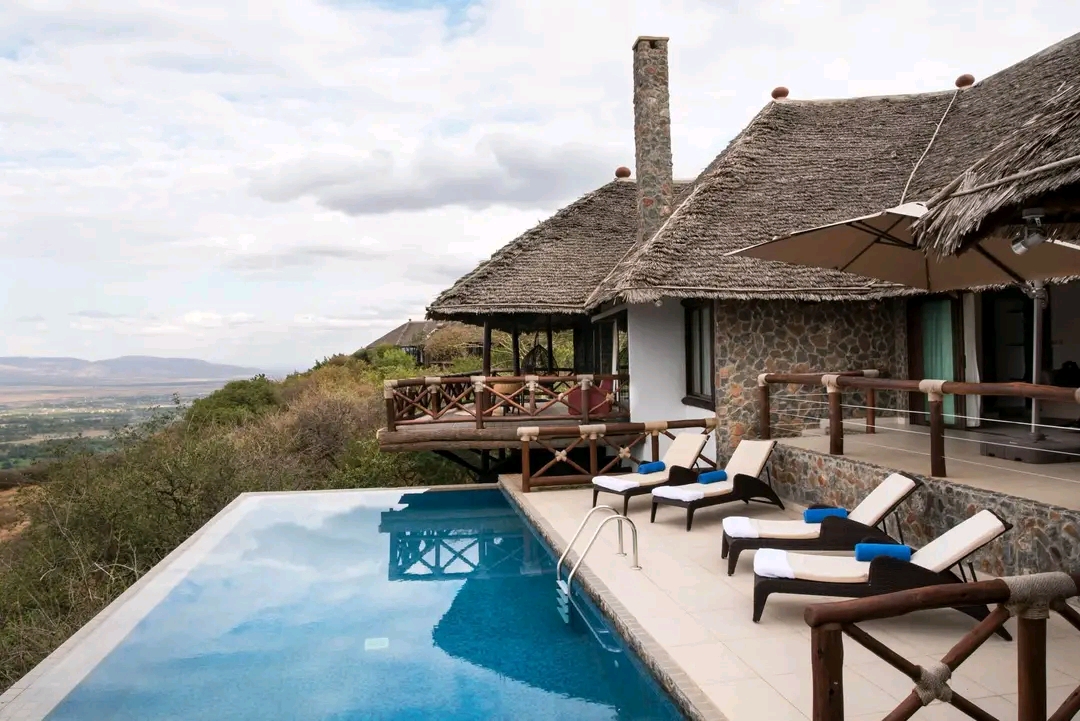
Getting to witness crossings depends heavily on where you sleep. Mobile tented camps positioned near crossing points give you the best odds. Here's how to choose:
For Mara River Crossings (Northern Serengeti)
Mobile Camps
📍 Kogatende Area
Best choice for crossings. These camps literally move twice a year to follow the Migration. You wake up with the herds nearby. Examples: Nomad Tanzania's camps, Ubuntu Migration Camp, &Beyond's Serengeti Under Canvas. Book 6-8 months ahead for peak season.
Permanent Lodges
📍 Northern Serengeti
More comfort, less flexibility. Fixed locations mean animals might not be nearby. But they offer luxury (pools, AC, Wi-Fi) and work if you're spending 3+ nights and have time to drive around. Examples: Sayari Camp, Mara Mara Tented Lodge.
Fly-in Camps
📍 Various Northern Spots
Skip the 6-hour drive from Central Serengeti. Many camps are accessible via light aircraft from Arusha or other Serengeti airstrips. Adds $200-400 per person per flight but saves time and your spine.
For Grumeti River Crossings (Western Corridor)
Fewer camps operate in the Western Corridor, but those that do are excellent. Key names: Singita Grumeti (ultra-luxury), Mbalageti Serengeti (mid-range with good value), Grumeti Migration Camp (mobile option). Book these for June and early July visits.
Camp positioning beats camp luxury for crossing experiences. A basic mobile camp 2km from a crossing point will deliver better sightings than a five-star lodge 40km away. Prioritize location over amenities if your goal is witnessing crossings.
The Patience Required: What Nobody Tells You
The Reality of Watching River Crossings
Here's what actually happens when you position yourself at a known crossing point:
Scenario 1 (Common): You arrive at the riverbank at 7 AM. Wildebeest are gathering, thousands of them, milling nervously. You wait. They approach the water's edge. They retreat. More arrive. They call to each other. You wait. An hour passes. Two hours. Your guide radios other vehicles - no crossings reported elsewhere. You wait. Finally, at 10:30 AM, one brave wildebeest leaps. Chaos erupts. Thousands follow within 5 minutes. Your heart races. Your camera fires hundreds of shots. It's spectacular. Then it's over. The herd has crossed. You've witnessed what you came for.
Scenario 2 (Also common): You wait for four hours. The wildebeest never cross. Your guide suggests moving to a different crossing point. You drive 45 minutes. Wait there for two hours. Nothing. As you're leaving, frustrated, you get a radio call - a massive crossing just happened at the first spot you left. This is safari. This is wildlife. This is why it's called a spectacle, not a show.
Scenario 3 (Lucky): You arrive, and within 20 minutes a crossing starts. You watch three separate waves cross over the next two hours. You feel like the safari gods smiled on you. Because they did.
Key mindset shift: Witnessing a crossing requires time, patience, and acceptance that it might not happen today. If you have 2-3 days in the northern Serengeti during peak season, your odds are very good. If you have one afternoon? You're rolling dice. Build multiple days into your itinerary to account for the unpredictability.
What You'll Actually See
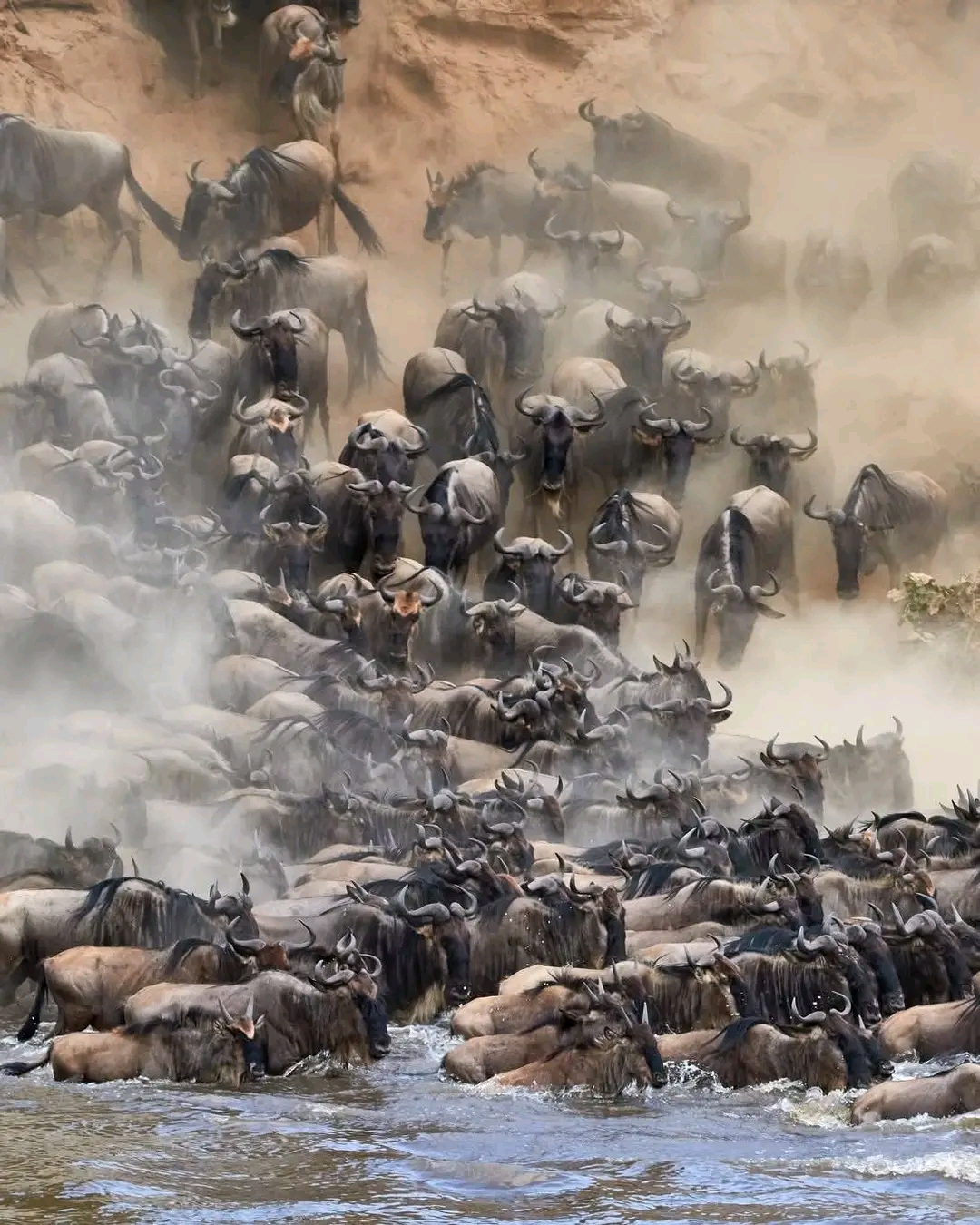
When crossings happen, here's the sequence of events:
The Build-Up: Herds gather at the riverbank. Hundreds, then thousands arrive. The noise is constant - grunting, bleating, hooves on dirt. Tension builds.
The First Leap: One wildebeest (usually a brave or desperate individual) jumps. Sometimes others follow immediately. Sometimes they don't, and that wildebeest crosses alone while thousands watch.
The Stampede: Once a critical mass decides to cross, it becomes a stampede. Wildebeest pour off the banks, sometimes from heights of 3-5 meters, plunging into the water in waves.
The Crossing: Chaos in the water. Wildebeest swim frantically. Crocodiles strike - you'll see them lunging, grabbing, dragging animals under. Some wildebeest drown, unable to climb the far bank or exhausted from the swim. Calves get separated and swept downstream.
The Exit: Survivors scramble up the opposite bank. The herd regroups. Within 30 minutes, the river might be empty except for crocodiles feeding and a few floating carcasses.
The sounds: The grunting and bleating is constant and haunting. The splash of thousands of bodies hitting water. The snap of crocodile jaws. The desperate calls of separated mothers and calves. It's visceral in a way photos can't capture.
The emotions: Witnessing this is intense. It's thrilling, disturbing, beautiful, and brutal all at once. Some people cry. Some laugh nervously. Everyone is awed.
“River crossings aren't cute. They're not 'fun.' They're raw, primal nature doing what it's done for millennia. If you want Disney, this isn't it. If you want to understand the circle of life at its most fundamental, this is ground zero.”
Photography Tips for River Crossings
Camera Settings:
Fast shutter speed (1/1000s minimum, 1/2000s ideal) to freeze action
Continuous shooting mode - fire bursts, not single shots
Aperture f/5.6-f/8 for depth of field without losing too much light
ISO as needed - don't be afraid of 800-1600 to get the shutter speed you need
Autofocus on continuous/tracking mode
Lens Choice:
Telephoto essential: 200-400mm range ideal
A mid-range zoom (24-105mm or 70-200mm) captures wider scenes of thousands crossing
Bring extra batteries and memory cards - you'll shoot hundreds of photos
Composition Tips:
Capture the build-up, not just the crossing itself
Look for individual dramas - a crocodile strike, a calf struggling
Wide shots showing the scale (thousands crossing) are as important as tight action shots
Don't forget the aftermath - exhausted survivors climbing out tells a story too
Pro Tip: Video is powerful here. Still photos are great, but the sound and movement of a crossing is captured best in video. Even phone video is worth taking alongside your camera shots. The chaos and scale translate better in motion.
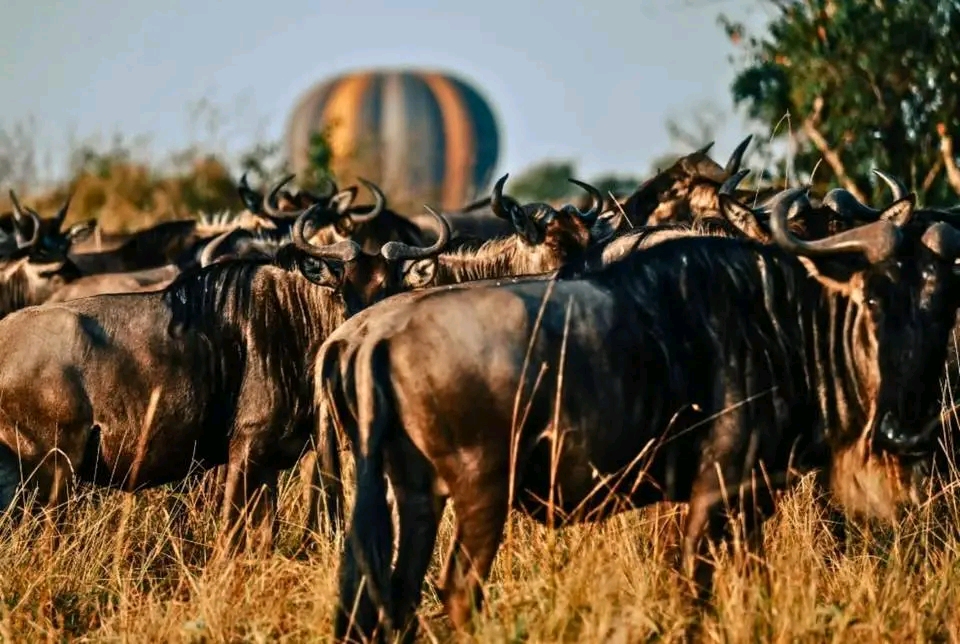
Combining River Crossings with the Rest of Your Safari
Most travelers don't come to the Serengeti only for crossings. Here's how to build a complete itinerary:
7-Day Serengeti Sample (Crossing-Focused):
Day 1: Arrive Arusha, overnight
Day 2: Fly to Northern Serengeti, afternoon game drive
Days 3-4-5: Northern Serengeti (crossing attempts, morning and afternoon drives)
Day 6: Fly to Central Serengeti for resident wildlife
Day 7: Return to Arusha or onward travel
10-Day Serengeti + Ngorongoro (Comprehensive):
Days 1-2: Tarangire National Park
Day 3: Ngorongoro Crater
Days 4-5: Central Serengeti
Days 6-7-8: Northern Serengeti (crossings)
Days 9-10: Return journey or fly to coast
Planning Your Complete Serengeti Itinerary
River crossings are spectacular, but they're one piece of the Serengeti puzzle. Our complete Serengeti Safari Manual covers all sectors, full Migration calendar, where to stay, costs, and how to build an itinerary that balances crossings with other wildlife experiences.
The Bottom Line: Is It Worth It?
Absolutely. Without question. Yes.
River crossings are expensive to access (northern Serengeti camps run $400-800+/night, fly-in costs add up). They require patience and luck. You might wait hours for nothing, or you might witness multiple crossings in a single day. It's unpredictable by nature.
But if you witness even one crossing - one desperate stampede of thousands of wildebeest plunging into crocodile-infested waters - it justifies the entire trip. This is bucket-list wildlife viewing. This is the moment that gets replayed on nature documentaries worldwide. And in person, it exceeds every expectation.
The key is proper planning: right months (July-September for Mara, June-early July for Grumeti), right camps (mobile camps near crossing points), right expectations (patience required), and enough days (3+ nights in northern Serengeti ideal).
“You don't come to the Serengeti for guarantees. You come for the possibility of witnessing something that stops time, makes your heart race, and reminds you why nature is worth protecting. River crossings deliver that.”
Ready to Plan Your Crossing Experience?
Start with the complete picture. Our Serengeti Safari Manual covers everything: Migration calendar, all sectors, camp choices, costs, and how to build the perfect itinerary.
Read the Complete Serengeti Guide
The river crossings are waiting. Now you know when, where, and how to see them.
See you at the Mara River.